



Publication
Publication tax shift for circular construction


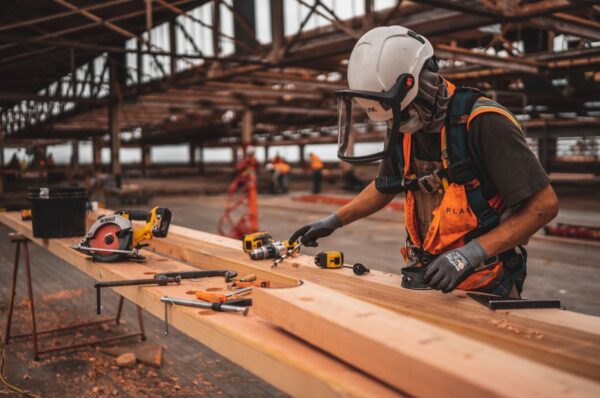
In practice, it appears that circular construction is at a disadvantage compared to traditional construction under the current fiscal system. This is primarily because the construction sector is labor‑intensive; after all, a large part of any construction project consists of labor costs. Circular construction is even more labor‑intensive, particularly because secondary building materials must be prepared for reuse. At the same time, circular building materials have to compete economically with linear materials whose prices do not reflect environmental costs (such as CO₂ emissions, depletion of natural resources, and other environmental impacts).
What is the added value of circular construction and demolition? How does the cost of circular construction and demolition compare to traditional construction and demolition methods? And what would a tax shift from labor to resources mean for the investment costs of circular construction and demolition?
This research is conducted using real‑world case studies. For these cases, a (theoretical) linear alternative is modelled, allowing a comparison between linear and circular approaches. For each case, we examine:
Consequently, several scenarios are developed for the tax shift. In these scenarios, the effects of three (fictitious) fiscal shifts are calculated:
Based on these tax‑shift scenarios, the change in investment costs for both the circular and linear variants is calculated.
Two studies have now been completed:
Unfortunately both reports are only available in Dutch.
Based on these two studies, we can share the following results:




Together we build a future that matters. We make choices that work today and remain valuable tomorrow. We create structures that can withstand change. Because real progress begins with vision and courage